
PhD Admission Process in India | Complete Guide 2026S
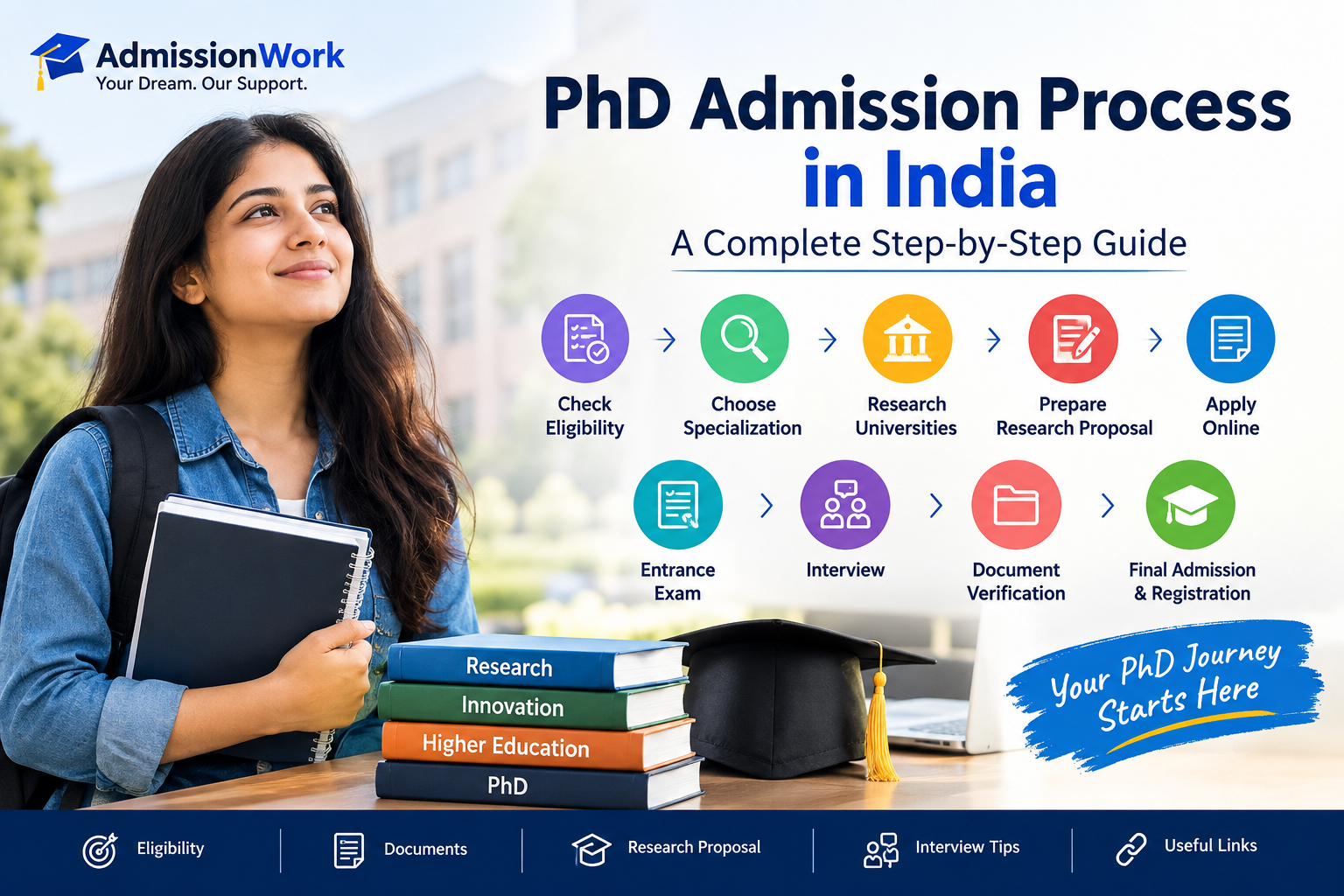
PhD Admission Process in India: A Complete Step-by-Step Guide
Pursuing a PhD is an important academic and professional decision. The admission process can vary from one university to another, but most institutions follow a similar sequence of eligibility verification, application, entrance examination or screening, research proposal evaluation, interview and final admission.
If you are planning to pursue a PhD in India, understanding the complete PhD Admission Process in India can help you prepare your documents, research proposal and application more effectively.
What Is the PhD Admission Process in India?
The PhD admission process is the procedure through which universities select eligible candidates for doctoral research programmes. Depending on the university and programme, admission may be based on an entrance examination, academic qualifications, research aptitude, interview performance or other applicable selection criteria.
Candidates should always check the current admission notification and official university requirements before applying because eligibility and selection rules may differ between institutions.
Step 1: Check PhD Eligibility
The first step is to check whether you meet the eligibility requirements of the university and subject you want to pursue. Generally, candidates need a relevant postgraduate qualification from a recognized institution, subject to the rules applicable to the programme.
Some universities may have additional requirements related to minimum marks, subject background, entrance examinations or research experience.
You can also read our detailed guide on PhD Eligibility to understand the basic requirements before starting your application.
Step 2: Choose the Right PhD Specialization
Choosing the right research area is one of the most important decisions before applying for a PhD. Your specialization should match your academic background, research interests and long-term career goals.
PhD opportunities may be available across areas such as:
- Arts and Humanities
- Science
- Commerce and Management
- Law
- Agriculture
- Engineering and Technology
- Pharmacy
- Education
- Social Sciences
- Yoga and Naturopathy
Step 3: Research Universities and PhD Programmes
After deciding your research area, compare suitable universities and PhD programmes. Consider factors such as the research area, faculty expertise, programme structure, eligibility requirements, admission schedule and research facilities.
Do not select a university only because of its name. The availability of suitable research supervision and a relevant research environment can be equally important.
Step 4: Prepare Your Research Proposal
A research proposal explains what you want to study and how you plan to conduct your research. A strong proposal generally includes the research topic, background, research problem, objectives, research questions, proposed methodology and expected contribution.
Important Elements of a Research Proposal
- Proposed research title
- Introduction and background
- Research problem
- Research objectives
- Research questions or hypotheses
- Research methodology
- Expected outcomes
- References
Your proposal should be clear, research-oriented and relevant to the selected subject. Avoid copying proposals from other sources. Originality and clarity are important when presenting a research idea.
Step 5: Complete the PhD Application Form
Once you have identified a suitable programme, complete the university application form carefully. Enter your academic information, personal details and research-related information accurately.
Before submitting the form, check the application deadline, required documents, application fee and instructions provided by the university.
Step 6: Prepare for the PhD Entrance Examination
Some universities may conduct an entrance examination as part of their PhD selection process. The examination pattern depends on the institution and programme.
Preparation may include research methodology, subject-specific concepts, research aptitude, analytical skills and other areas mentioned in the official admission notification.
Candidates should review the applicable syllabus and previous examination patterns where available.
Step 7: Attend the PhD Interview
Candidates shortlisted for the next stage may be invited for an interview or research presentation. The interview can help the university understand the candidate's academic background, research interests and understanding of the proposed topic.
How to Prepare for a PhD Interview
- Understand your proposed research topic.
- Know your research objectives clearly.
- Be prepared to explain your methodology.
- Review important concepts from your subject.
- Be ready to discuss why your research is relevant.
- Answer questions honestly and clearly.
Step 8: Document Verification
After selection, universities may require candidates to submit or verify academic and other relevant documents. The exact requirements vary by institution.
Commonly requested documents can include academic certificates, marksheets, identification documents, photographs, category-related documents where applicable and other documents specified by the university.
Step 9: Final Admission and Research Registration
After completing the applicable selection and verification stages, successful candidates can proceed with the admission or registration process according to the university's instructions.
The next stages may include coursework, research methodology training, interaction with the research supervisor, refinement of the research proposal and other requirements specified by the programme.
How Long Does the PhD Admission Process Take?
The duration of the admission process depends on the university, programme and admission cycle. Application submission, screening, entrance examination, interview, document verification and final registration may occur at different stages.
Candidates should therefore monitor official admission notifications and important dates rather than relying on a single standard timeline.
Common Mistakes to Avoid During PhD Admission
- Applying without checking eligibility requirements.
- Choosing a research topic without sufficient background research.
- Submitting an unclear or poorly structured research proposal.
- Ignoring university-specific application instructions.
- Waiting until the last date to prepare documents.
- Using copied or misleading information in the application.
- Choosing a programme without considering research supervision.
Tips for a Successful PhD Application
Start your preparation early and maintain a checklist of important admission requirements. Research your preferred subject areas, prepare your academic documents and develop a clear understanding of your proposed research topic.
It is also useful to compare multiple programmes before making a final decision. Candidates should verify all important admission information directly from the respective university's official notification.
Frequently Asked Questions About PhD Admission
What is the first step in PhD admission?
The first step is generally to check your eligibility and identify suitable PhD programmes based on your academic background and research interests.
Is a research proposal required for PhD admission?
Requirements vary between universities and programmes. Some institutions may require a research proposal during the application or interview stage, while others may follow a different process.
Does every university conduct a PhD entrance examination?
No. The selection process can differ between universities and programmes. Candidates should check the applicable admission notification for the exact selection criteria.
What should I prepare for a PhD interview?
Candidates should understand their proposed research topic, objectives, methodology and subject fundamentals. They should also be prepared to explain why they want to pursue the proposed research.
Final Thoughts
The PhD Admission Process in India requires careful planning and preparation. From checking eligibility and selecting a research area to preparing a proposal, completing the application and attending the selection process, each stage deserves attention.
If you are planning your doctoral journey, explore the available guidance on PhD Admission and learn more about PhD Admission Process before preparing your application.
Important: Admission requirements, eligibility criteria and selection procedures can change between universities and admission cycles. Always verify the latest information from the respective university before applying.
Looking for PhD Admission Guidance?
Get free synopsis evaluation & university recommendations.
AdmissionWork
Education & Research Expert • AdmissionWork
Specialist in doctoral research consulting, UGC compliance protocols, and thesis formulation.