
How to Prepare for a PhD Interview: Questions & Tips
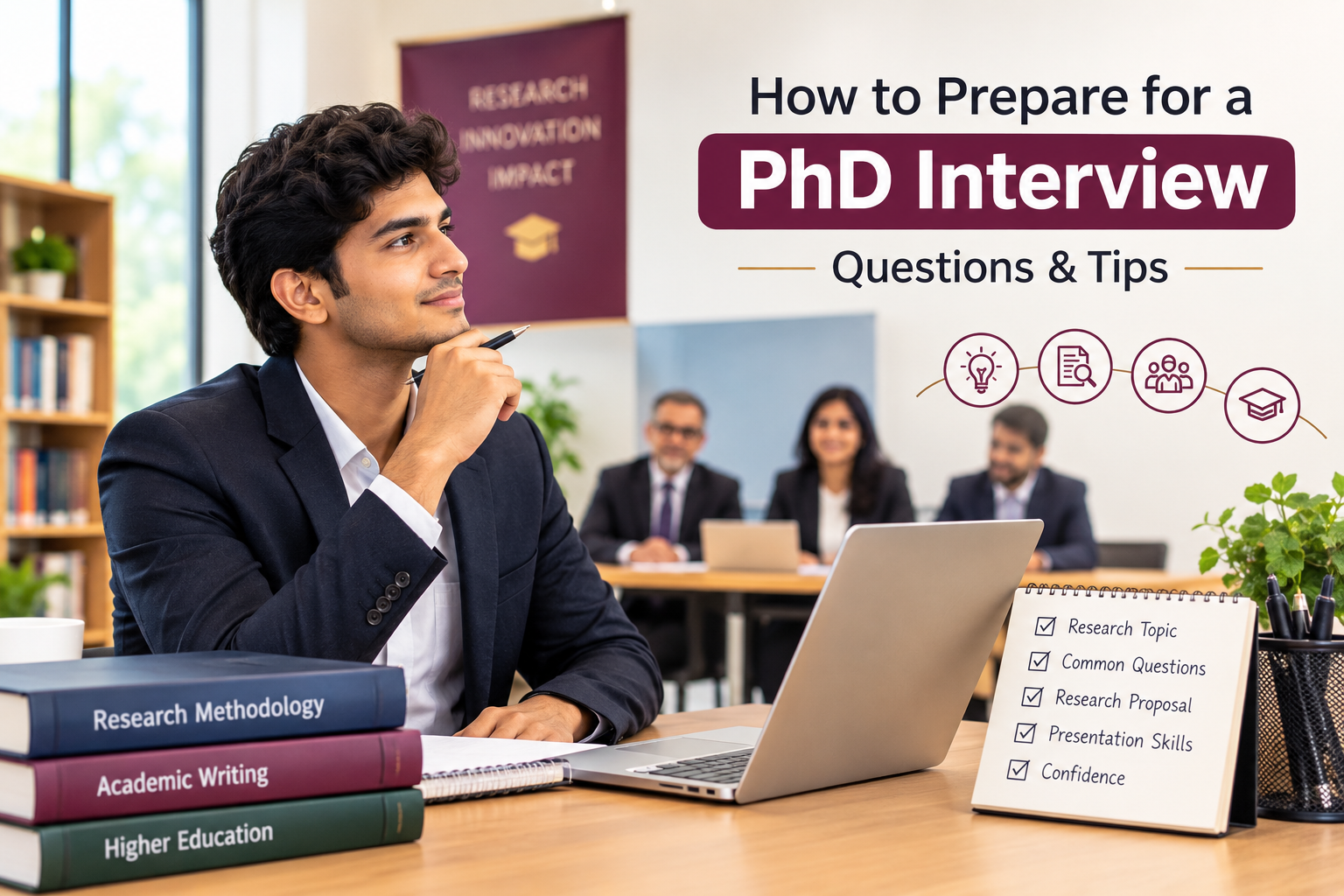
How to Prepare for a PhD Interview: Questions & Tips
A PhD interview is more than a formal conversation. It is your opportunity to demonstrate your research interest, academic understanding, confidence and readiness for doctoral-level study.
Preparing for a PhD Interview requires more than simply revising your academic subjects. Candidates should understand their research topic, prepare for common questions, review their research proposal and practice explaining their ideas with confidence.
Reaching the PhD interview stage is an important milestone in your academic journey. Whether you are applying for a PhD in Management, Commerce, Education, Engineering, Agriculture, Law, Science, Arts or another discipline, the interview can influence how the research committee evaluates your candidature.
Many candidates prepare only for questions related to their master's degree or research topic. However, a successful PhD admission interview usually involves much more: your motivation, research interests, understanding of the proposed topic, methodology, academic background and long-term goals may all be discussed.
Why Is the PhD Interview Important?
A PhD is a research-focused academic programme. Universities need to understand whether a candidate has the interest, preparation and commitment required for doctoral research.
During the interview, the research committee may evaluate:
- Your academic background and subject knowledge
- Your motivation for pursuing a PhD
- Your research interests and proposed research area
- Your understanding of the research problem
- Your communication and presentation skills
- Your awareness of research methodology
- Your ability to explain and defend your research ideas
- Your long-term academic or professional goals
How to Prepare for a PhD Interview
Good preparation can make your answers clearer and help you enter the interview with greater confidence. Start preparing several days or weeks before the interview rather than trying to memorize answers at the last moment.
Understand Your Research Topic
Be clear about your proposed research topic, research problem, objectives, possible research questions and expected contribution.
Review Your Academic Background
Revise important concepts from your master's degree and subjects related to your proposed research area.
Know Your Research Methodology
Understand whether your research may use qualitative, quantitative or mixed-method approaches and why.
Research the University
Learn about the university, department, research environment and areas of expertise relevant to your proposed study.
10 Common PhD Interview Questions
While every university may have its own interview format, these are some common questions candidates should prepare for.
1 Why do you want to pursue a PhD?
Explain your academic or professional motivation honestly. Avoid giving a generic answer such as "I want to become a doctor." Instead, connect your interest to research, knowledge creation, teaching, innovation or your professional goals.
2 Why did you choose this research topic?
Explain what attracted you to the topic and identify the research problem or knowledge gap that you would like to explore. Show that your topic is based on a genuine academic interest.
3 What is your proposed research problem?
Give a clear and concise explanation of the problem you want to investigate. Avoid using complicated terminology if a simpler explanation communicates your idea better.
4 What are your research objectives?
Be prepared to explain what your research intends to discover, analyse, compare, evaluate or develop. Your objectives should logically connect with your research problem.
5 Which research methodology will you use?
Discuss the likely research approach and explain why it fits your research question. If your methodology is not finalized, clearly state that it may be refined after detailed literature review and discussions with your supervisor.
6 What is the research gap in your topic?
A research gap refers to an area that has not been sufficiently explored or where existing research leaves unanswered questions. Demonstrate that you have started reviewing relevant literature.
7 Why did you choose this university?
Talk about relevant academic strengths, research environment, faculty expertise, facilities or the university's suitability for your proposed research area.
8 What are your career plans after completing your PhD?
Explain how the doctorate fits into your long-term plans. Your answer could include research, teaching, industry, consultancy, academic leadership or another research-oriented path.
9 What challenges do you expect during your research?
Show that you understand doctoral research requires patience, continuous learning and problem-solving. Mention realistic challenges and explain how you would approach them.
10 Why should we select you for this PhD programme?
Highlight your academic preparation, research interest, relevant experience, commitment and willingness to learn. Focus on what you can contribute as a researcher rather than simply saying that you are hardworking.
How to Explain Your Research Proposal in an Interview
If the university asks you to present or discuss a research proposal, organize your explanation logically. A simple structure can make your presentation much easier to follow.
- Research Topic: Introduce your proposed area.
- Background: Explain the context of the study.
- Research Problem: Identify the issue you want to investigate.
- Research Gap: Explain what existing studies have not adequately addressed.
- Objectives: State what you want to achieve.
- Research Questions: Explain the key questions your study will explore.
- Methodology: Describe the likely research approach.
- Expected Contribution: Explain how the research could add value.
PhD Interview Presentation Tips
Keep Your Answers Focused
Answer the question first and then provide supporting details. Avoid unnecessarily long explanations.
Read Recent Research
Review important papers and studies related to your proposed research area before the interview.
Practice Speaking
Practice explaining your research topic in simple language. Record yourself if possible and improve clarity.
Be Honest
If you do not know an answer, do not invent one. Explain what you know and show willingness to learn.
Common Mistakes to Avoid in a PhD Interview
- Memorizing answers without understanding your research topic
- Giving vague answers about your research objectives
- Choosing a research topic without understanding the research gap
- Ignoring research methodology
- Speaking negatively about previous academic experiences
- Trying to sound overly technical instead of being clear
- Not researching the university or department
- Arriving late or appearing unprepared
- Using unsupported claims in your research proposal
- Being afraid to admit that some parts of the proposal may evolve
One-Day-Before PhD Interview Checklist
- Review your research proposal
- Revise your research objectives
- Review important concepts from your subject
- Read a few recent research papers related to your topic
- Prepare a short introduction about yourself
- Practice explaining your research topic in 2–3 minutes
- Prepare answers for common interview questions
- Check the interview time and format
- Keep required documents ready
- Get adequate rest before the interview
What Happens After a PhD Interview?
The process after an interview depends on the university and its admission rules. Candidates may be informed about the next stage through an official communication from the institution.
Depending on the admission process, the next steps may include document verification, further academic procedures, research discussions or other university-specific requirements.
Therefore, candidates should always follow the official instructions provided by the university regarding admission and enrollment.
Preparing for Your PhD Journey?
Interview preparation is only one part of the doctoral admission journey. Choosing an appropriate research area, understanding eligibility, preparing a research synopsis and identifying a suitable university are also important steps.
If you are exploring PhD admission 2026–27, you can learn more about doctoral admission guidance and research support through AdmissionWork.
Frequently Asked Questions About PhD Interviews
1. What questions are asked in a PhD interview?
Common questions may cover your academic background, motivation for pursuing a PhD, research topic, research gap, objectives, methodology, university choice and future career plans.
2. How should I prepare for a PhD interview?
Review your research proposal, understand your research topic, revise relevant academic concepts, read recent literature, research the university and practice explaining your ideas clearly.
3. Is a research proposal important for a PhD interview?
If the university requires a research proposal, you should be prepared to explain its problem statement, objectives, research questions, methodology and expected contribution.
4. What should I wear for a PhD interview?
Choose clean, professional and comfortable clothing appropriate for an academic interview. The goal is to look presentable without letting your appearance distract from your academic discussion.
5. What if I don't know an answer during the interview?
Stay calm and be honest. You can explain what you currently understand and indicate that you would like to explore the topic further through research.
Ready to Take the Next Step Toward Your PhD?
A strong PhD journey starts with the right research direction, university selection and preparation. Get guidance for your doctoral admission journey with AdmissionWork.
Explore PhD Guidance Start Your EnquiryAdmissionWork • PhD Admission Guidance • Research & Academic Support
Looking for PhD Admission Guidance?
Get free synopsis evaluation & university recommendations.
AdmissionWork
Education & Research Expert • AdmissionWork
Specialist in doctoral research consulting, UGC compliance protocols, and thesis formulation.