
PhD Admission 2026–27: Research Idea to PhD Journey
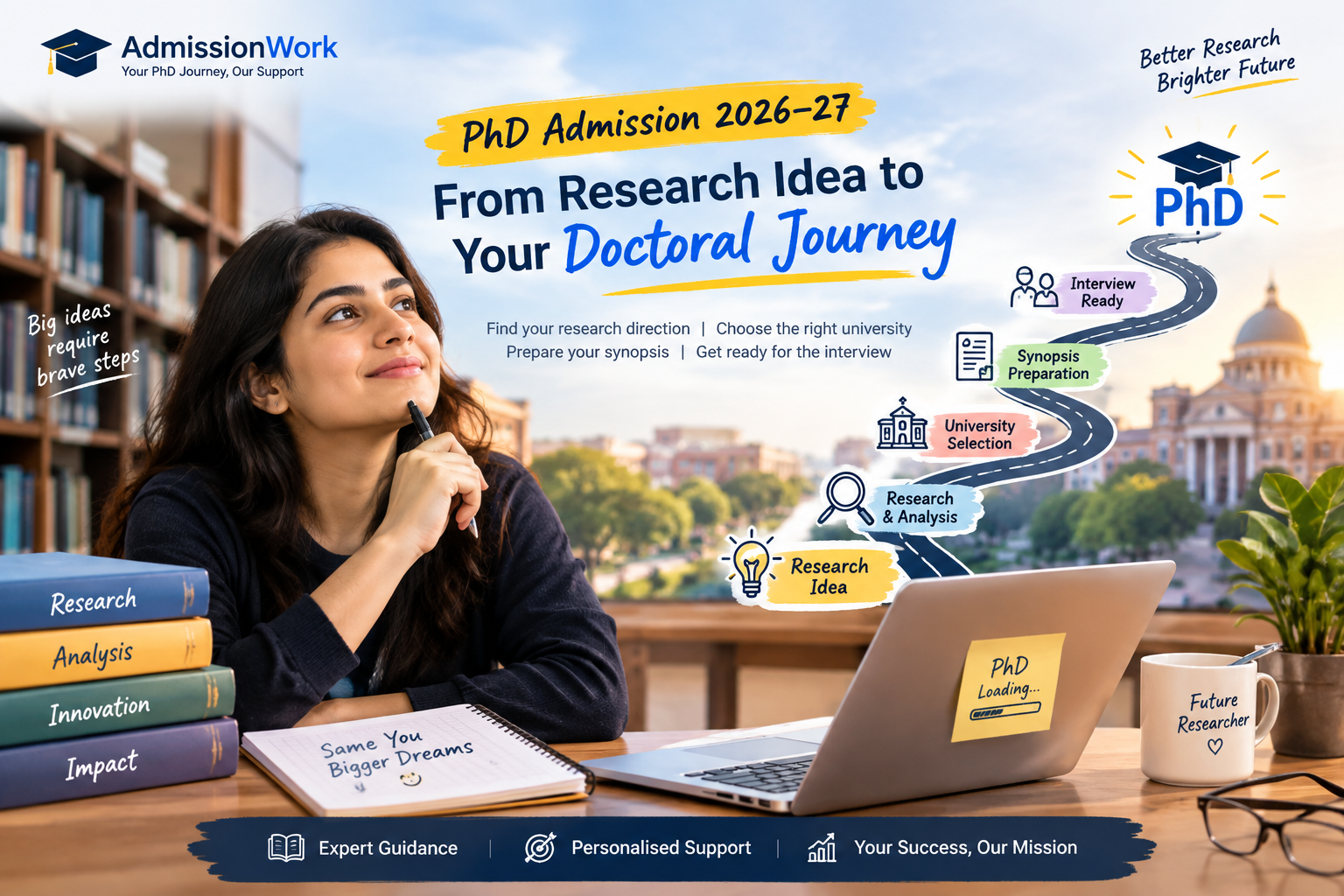
PhD Admission 2026–27: From a Research Idea to Your Doctoral Journey
There is a moment when a simple question becomes something bigger.
“What if I could research this?”
For many students and working professionals, that question is where the PhD journey begins. Not with a certificate. Not with the title “Dr.”. And not even with an application form. It begins with an idea that refuses to leave your mind.
If you are planning PhD Admission 2026–27, this guide will help you understand what happens between having a research idea and taking your first serious step toward doctoral research.
At AdmissionWork, our goal is to make this journey easier to understand—from choosing a research direction to preparing for the admission process.
Why Does a PhD Start With a Question?
A PhD is not simply about studying another degree. It is about exploring a question deeply enough to produce meaningful research.
Maybe you noticed a problem during your master's degree. Maybe your work experience made you curious about a particular issue. Maybe you have been reading about a subject for years and now want to investigate it scientifically.
That curiosity can become the foundation of your doctoral research.
Your idea will become clearer as you explore existing research, identify a research gap and discuss the direction with academic experts.
PhD Admission 2026–27: Where Should You Start?
One of the biggest mistakes applicants make is searching for a university before understanding what they actually want to research.
A better approach is to work backwards.
- Identify your broad research interest.
- Explore existing research and recent literature.
- Find a possible research gap.
- Develop a practical research question.
- Identify suitable research areas and supervisors.
- Shortlist universities according to their current admission requirements.
- Prepare the documents required for the application.
This approach can save you from choosing a PhD programme simply because its advertisement appeared first on your screen.
How to Turn Your Idea Into a PhD Research Topic
You do not need to have a perfect title on day one. In fact, your first idea may change several times.
Start with three simple questions:
- What problem interests me?
- Why is this problem important?
- What has already been studied about it?
For example, instead of beginning with a very broad topic such as “Artificial Intelligence in Education”, you could gradually narrow your interest toward a specific problem, population, method or context.
The goal is not to make the topic sound complicated. The goal is to make the research question meaningful and researchable.
What Is a Research Gap?
The phrase “research gap” can sound intimidating when you first hear it. But the basic idea is simple.
A research gap is an area where existing research does not fully answer an important question, or where a particular problem, population, method or context needs further investigation.
Finding a research gap requires reading. A lot of reading.
Research papers, review articles, books, reports and previous studies can help you understand what researchers already know—and what still needs to be explored.
Choosing the Right University for PhD Admission
University selection should not be based only on advertisements, rankings or promises.
Before applying, check the university's current official information about:
- PhD programmes and available research areas
- Eligibility requirements
- Admission and entrance process
- Interview requirements
- Research supervisor availability
- Coursework and research requirements
- Fees and other applicable charges
- Important admission dates
- Recognition and regulatory information applicable to the programme
UGC's official website lists the UGC Minimum Standards and Procedure for Award of Ph.D. Degree Regulations, 2022. However, applicants should also check the current rules and admission notification of the particular university because application procedures and requirements can vary. Check official UGC information.
PhD Synopsis: Why Is It Important?
A research synopsis is more than a document you upload with your application. It is an opportunity to explain your research direction clearly.
Depending on the university and programme, a research proposal or synopsis may discuss areas such as:
- Research title
- Background of the study
- Research problem
- Research objectives
- Research questions or hypotheses, where appropriate
- Review of relevant literature
- Research methodology
- Expected contribution
- References
The exact format should always be prepared according to the requirements of the university or department you are applying to.
What Happens in a PhD Interview?
A PhD interview is not simply about memorising definitions. It is often an opportunity to discuss your research interest and demonstrate that you understand what you want to investigate.
You may be asked questions such as:
- Why did you choose this research topic?
- What problem are you trying to investigate?
- What is already known about your topic?
- What could your research contribute?
- Which research methods could be suitable?
- Why did you choose this university?
You do not need to pretend that you know everything. A thoughtful answer is often more useful than a complicated answer you cannot explain.
Can Working Professionals Pursue a PhD?
For working professionals, the PhD journey can look different from that of a full-time student.
Work schedules, research time, travel, coursework and university requirements all need to be considered before applying.
If you are working, do not select a programme simply because someone describes it as “easy” or “flexible.” Instead, verify the programme's current requirements directly with the university and understand the academic commitments involved.
Your professional experience can be valuable when it connects naturally with your research interests—but it does not replace the academic requirements of the doctoral programme.
What If You Have a Gap After Your Previous Degree?
A gap in education does not automatically mean that your academic journey has to stop.
What matters is understanding the eligibility requirements of the PhD programme you want to apply to and preparing the required documents correctly.
If you have spent several years working, preparing for competitive examinations, managing family responsibilities or developing professionally, those years are part of your personal journey.
The important step is to focus on what you want to research now and verify whether you meet the current admission requirements.
Common PhD Admission Mistakes to Avoid
1. Choosing a topic only because it sounds impressive
A complicated title does not automatically make a strong research topic. Choose a question that you can understand, investigate and explain.
2. Copying an old research proposal
A proposal should reflect your own research question and the requirements of the programme. Avoid submitting generic or copied content.
3. Ignoring the official admission notification
Dates, eligibility criteria, entrance requirements and documents can vary between universities and admission cycles. Always check the current official notification.
4. Choosing a university without checking research fit
A university may offer your subject but still not have the right research environment or supervisor availability for your specific area. Research fit matters.
5. Treating the PhD as only a career title
The title “Dr.” may be one visible outcome of completing a doctorate, but the actual journey is built around research, academic discipline, critical thinking and contribution to knowledge.
A Simple PhD Admission 2026–27 Roadmap
Step 1 — Explore
Identify the subject and research area that genuinely interests you.
Step 2 — Research
Read existing studies and understand the research landscape.
Step 3 — Refine
Turn your broad interest into a focused research problem.
Step 4 — Shortlist
Compare universities, programmes and current admission requirements.
Step 5 — Prepare
Work on your synopsis, documents and interview preparation.
Step 6 — Apply
Submit your application according to the university's official process.
Step 7 — Begin the journey
If selected, complete the required admission and academic formalities and begin your doctoral research.
Your PhD Journey Doesn't Have to Begin With a Perfect Idea
Many future researchers wait for the “perfect” research topic. But research rarely begins perfectly.
It begins with curiosity. Then comes reading. Then questions. Then uncertainty. Then refinement.
Eventually, a broad idea can become a research problem that deserves serious investigation.
If you are preparing for PhD Admission 2026–27, start by understanding your research interest and the requirements of the universities you are considering.
And if you need help understanding the admission journey, research synopsis preparation or university selection, you can explore AdmissionWork – PhD Admission Guidance.
Frequently Asked Questions About PhD Admission 2026–27
When should I start preparing for PhD Admission 2026–27?
Start as early as possible by identifying your research area, reading relevant literature and checking current university admission notifications.
Do I need a final research topic before applying?
Requirements vary by university and programme. Some applications may ask for a research proposal or synopsis, while the exact format and expectations can differ. Always check the current official notification.
Is a PhD only for students who want to become professors?
No. Doctoral research can be relevant to academic, research, policy, industry and specialised professional pathways, depending on the field and the individual's career goals.
How do I select a PhD research topic?
Start with an area that genuinely interests you, review existing research, identify an unanswered or underexplored problem and discuss whether the idea is feasible with appropriate academic guidance.
Where can I get PhD admission guidance?
You can explore the resources and PhD admission guidance available through AdmissionWork. Always verify final eligibility, admission dates and programme requirements with the concerned university.
Ready to Take the First Step Toward Your PhD?
Your doctoral journey may begin with one question, one idea and one decision to explore it seriously.
Important: PhD eligibility, admission procedures, entrance requirements, fees, research areas and important dates can vary by university and admission cycle. Applicants should verify the latest information directly from the concerned university and official regulatory sources before applying.
Looking for PhD Admission Guidance?
Get free synopsis evaluation & university recommendations.
AdmissionWork
phd • AdmissionWork
Specialist in doctoral research consulting, UGC compliance protocols, and thesis formulation.